
It was around 1:45 in the morning, as I was laying down wooden walkways to help little rodents get to work faster, that I realized I was fully hooked by Whiskerwood, a newly released city-builder and resource manager that blends together Timberborn, Factorio, and Sid Meier’s Colonization.
Out now on Steam via early access, Whiskerwood is a top-down real-time city builder that has you leading Whiskers, lowly mouse peasants and workers, as they travel to new lands in the 1700s by order of the rich, powerful Claws, a group of royal cats. After picking a spot to build a dock for incoming ships and a warehouse to store goods, you start harvesting supplies to begin building up a tiny mouse settlement. Your goal isn’t simply to survive, but also to harvest enough resources, including fish, berries, logs, and rock, to pay off your taxes, which are claimed every so often in-game by a royal fleet. As you do, the amount of taxes you have to pay goes up, and wait a minute…I don’t think these Claws are good people!
Early on, one of your mice rightfully points out that, hey, the Claws provided the mice supplies to build structures that would enrich the cats, but failed to provide much more than that, leaving the Whiskers basically on their own to figure out how to build a town and not all perish in a few days. Once again, not sure these cats can be trusted.
This part of Whiskerwood is currently the least developed, with what sounds like plans to allow a self-sufficient colony to cut itself off from the Claws and even revolt. For now, that stuff mostly sits in the background and provides a good reason to harvest more and more supplies.
While the game’s recreation of 1700s colonization hooked me at first, what kept me around until way too late the first night I played was the easy-to-understand city-building mechanics and smartly designed UI. Doing anything in Whiskerwood rarely takes more than two clicks. Each menu is easy to read, navigate, and close, which isn’t always the case in games like this. Whiskerwood also does a fantastic job, even in early access, of providing players with all the information they need to know about where mice are going, what they need, what’s missing, which resources are low, and so forth.
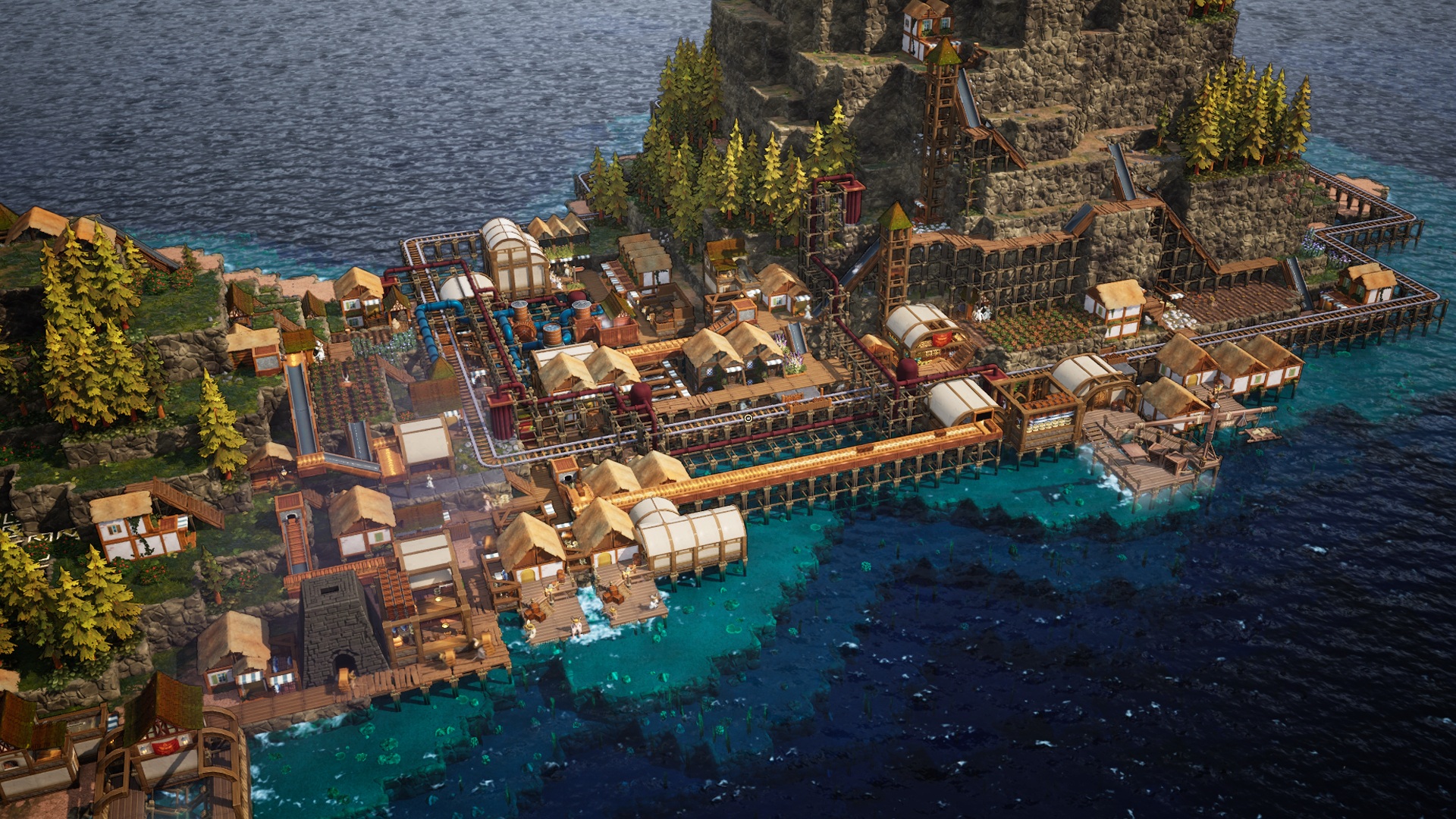
I especially love the alert banners that appear for important problems, like an injured mouse. Or to let you know that a mouse might have a long trek to the mines from his tiny hovel. You just click on it, and it zips you to the problem, and from there, you’re usually a click away from moving a mouse or tweaking some part of a building.
Making that trip shorter or more efficient is a breeze with Whiskerwood’s snappy building and management menus, which feel like they were built by people who understand how vital this stuff is to making a city builder fun. But all of this smart design doesn’t come at the cost of simplification! This is still a complex game that will demand that you create more and more elaborate networks of buildings, conveyors, stairs, transportation, housing, and storage to be able to not only pay your taxes but also survive harsher seasons and weather.
I’ve only put about five hours into Whiskerwood so far, but based on what I’ve played and the gushing I’ve seen from city builder experts like Luke Plunkett over at Aftermath, I’m excited to keep playing. Hopefully one day my tiny mice will rise up, seize the means of production from the Claws, and gain independence. For now, they’ll need to keep breaking rocks and cutting down trees for those fat cats.